Genealogical records tell you when they were born.
Rooted History helps you understand how they lived.
Connect your FamilySearch tree to see your family across centuries and places, ask questions in your own words, and find the ancestors you want to know better.

Explore the family behind the records
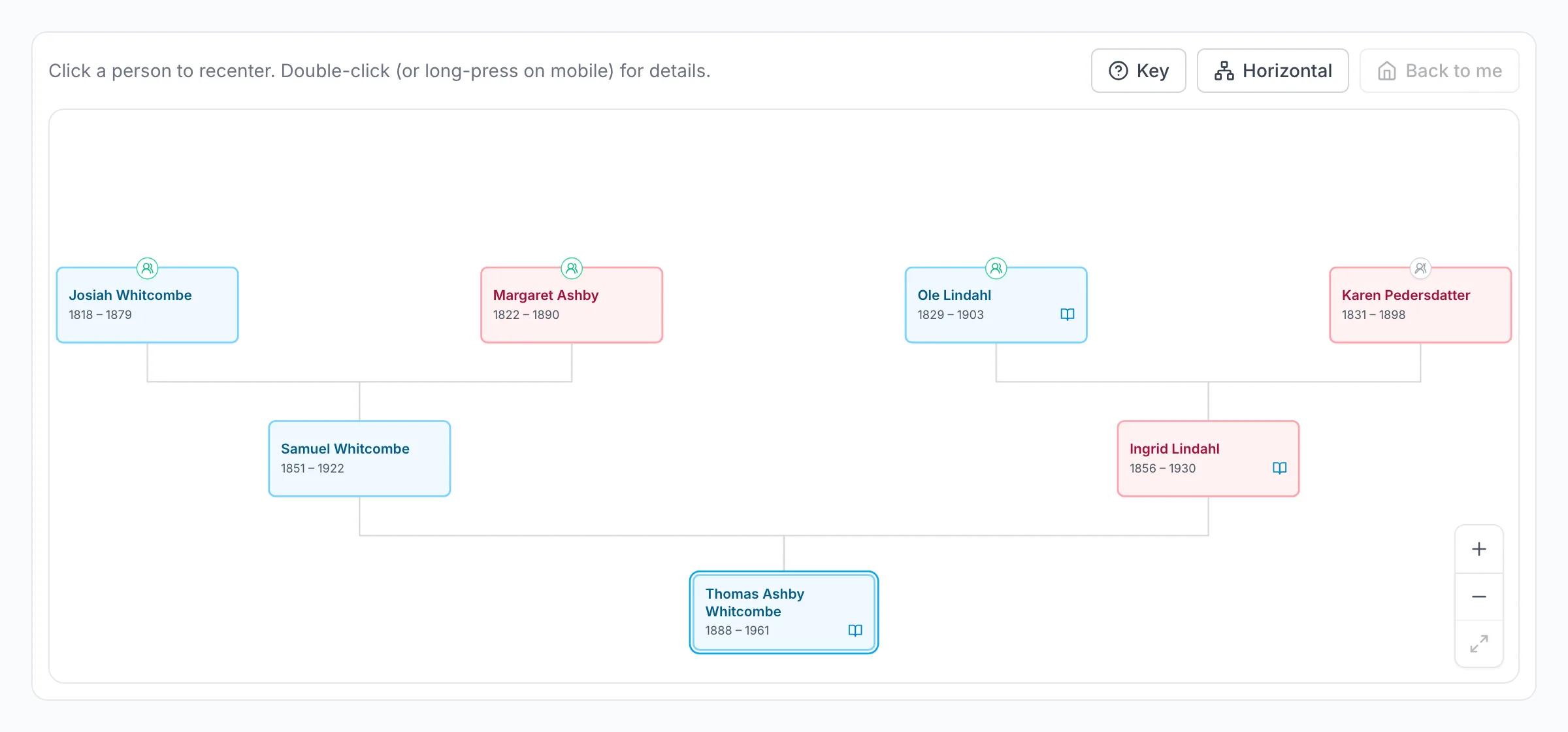
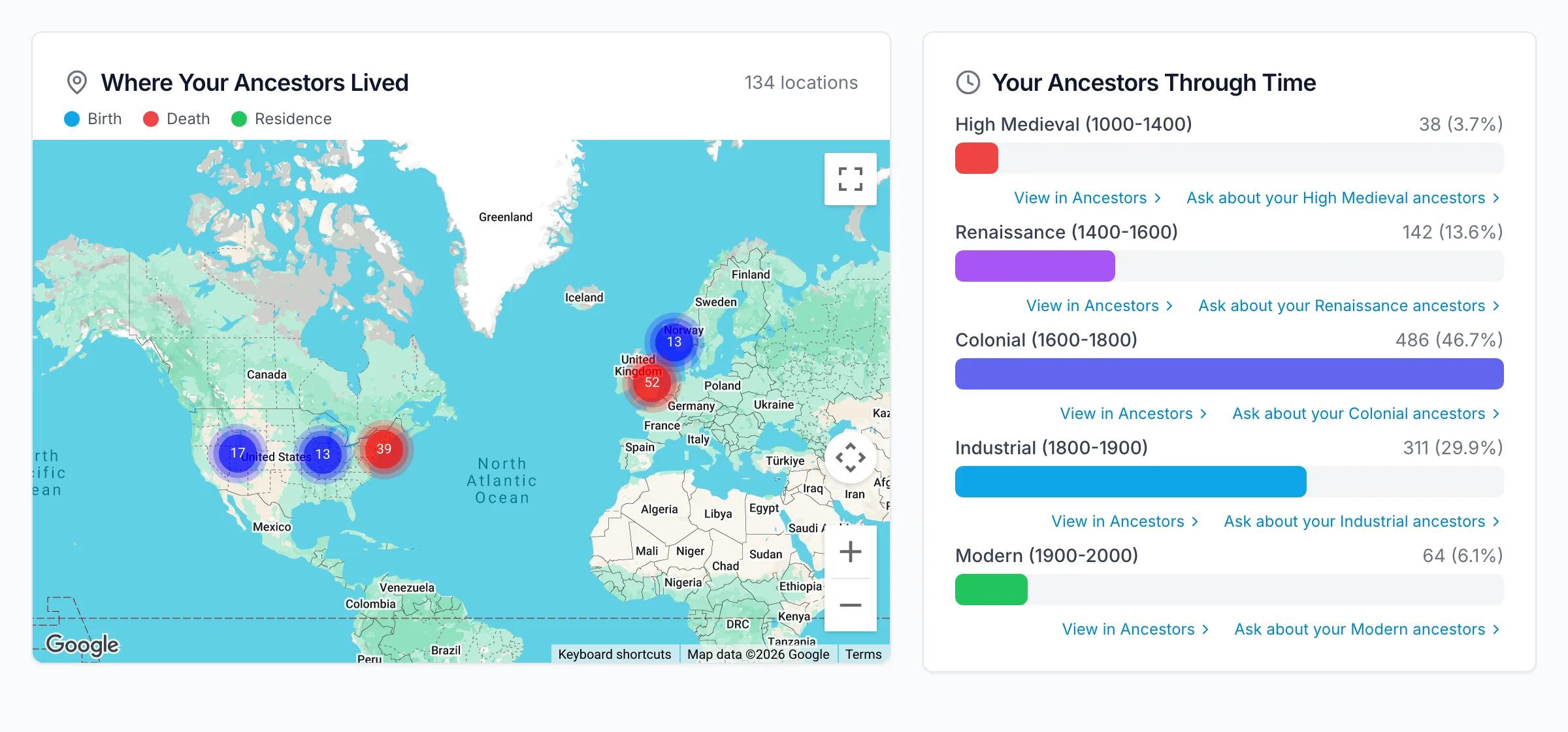
Start with your family tree and click from parent to parent, generation by generation. Then use Explore to see where your ancestors lived and when, and to spot missing dates and records that don’t add up. Follow whatever interests you to any ancestor’s record.
Bring your curiosity
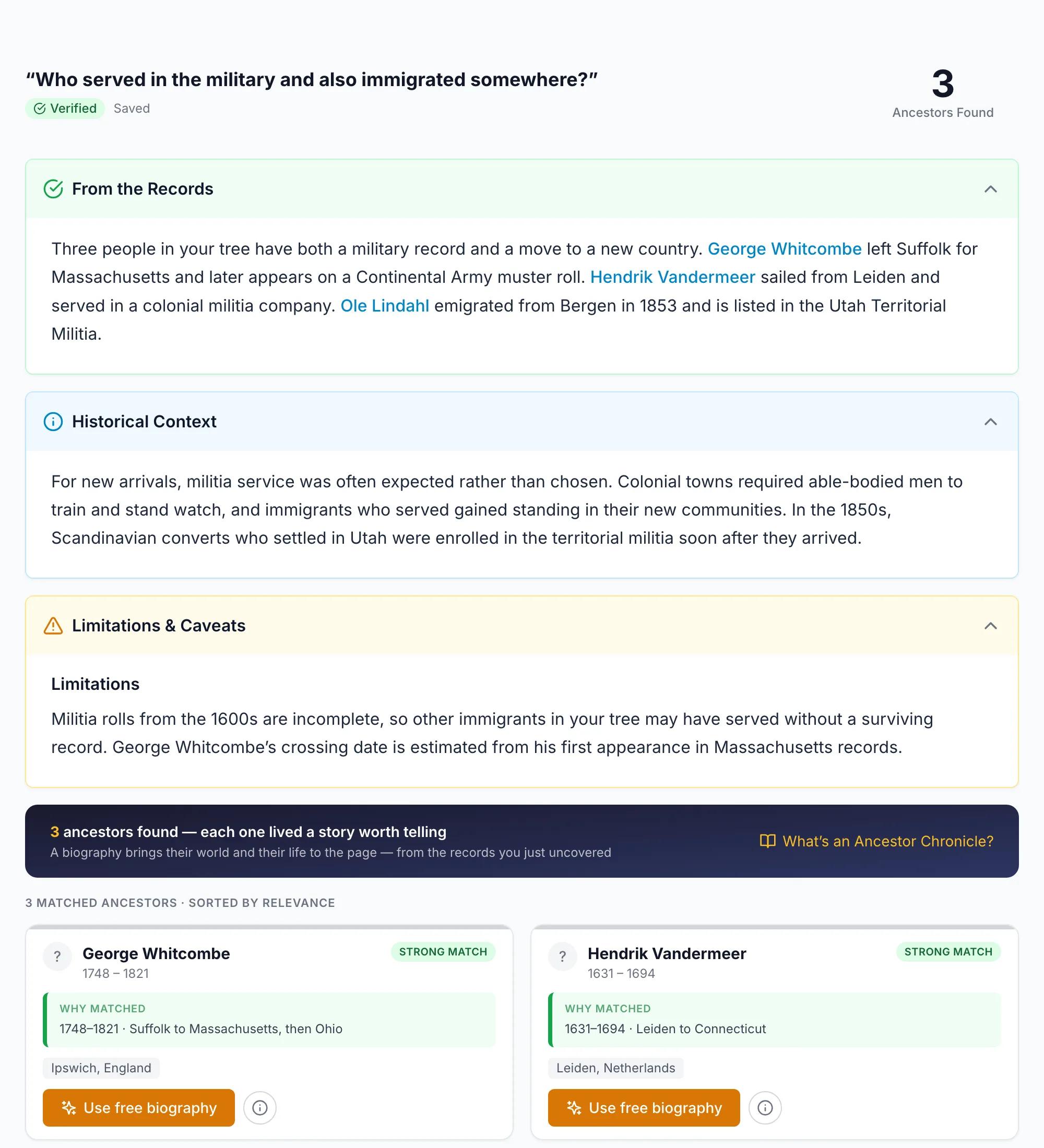
Ask questions in your own words, like “Who in my family was alive in America in 1776?” or “Who was the youngest person in my family to get married?” No genealogy vocabulary needed.
Find someone you want to know better
Open an ancestor’s record as you explore. When a life catches your attention, an Ancestor Chronicle tells the story of that person’s life in its historical setting.
See Chronicle pricing →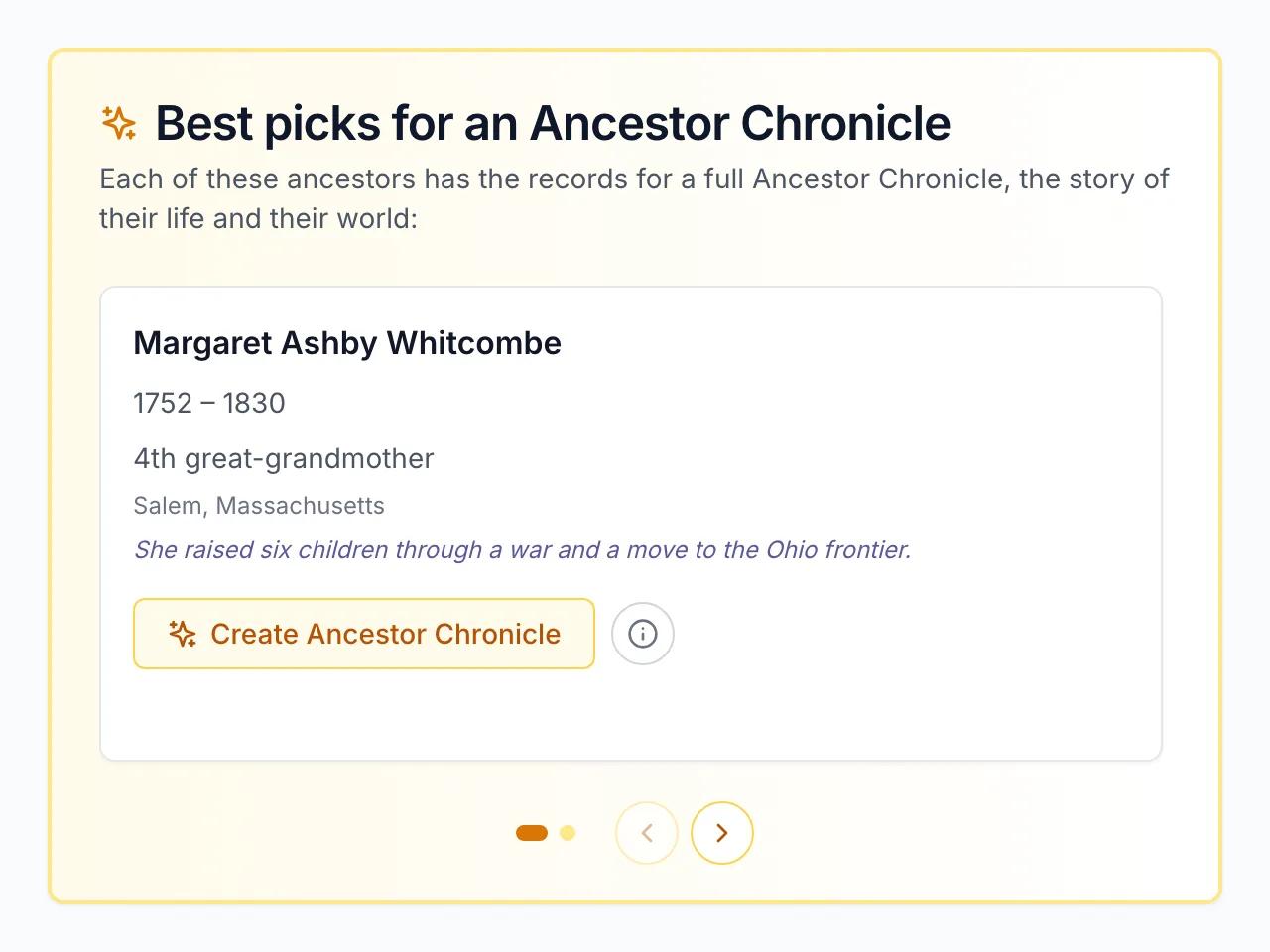
Every sentence, accounted for
See a full Ancestor Chronicle
Read four complete Chronicles.
View the four examples →Narrated by a natural AI voice.
Every Chronicle comes in Original, Relaxed Reading, and For Kids versions, each with audio narration.
Tatous Thadeus Gugas Kizerian1863–1945
How to read this:Bold = from your ancestor's records[1] = historical source our reasoning general background historians disagree
Tatous Thadeus Gugas Kizerian was born on 13 September 1863 in Zara, Sivas, in the Armenian heartland of the Ottoman Empire. His parents, Gugas Hohones Kizerian and Goola Baboog Modoian, were both natives of Zara, and the Kizerian family had lived there at least since his grandfather Hohannes Kachig Kizerian was born in the town in 1780. By the time Tatous arrived, his family had belonged to that one place for three generations.
His name carried a great deal of history. His middle name, Gugas, was his father's name, just as his father's second name, Hohones, echoed the grandfather Hohannes, and his mother's second name, Baboog, was her own father's. Armenian families commonly carried a father's given name as a second name, so a person's full name was a short genealogy, telling the town whose son or daughter he was. His first name reached back even further. Tatous and Thadeus are two forms of one name, Thaddeus, the apostle the Armenian Church honors, alongside Bartholomew, as one of the first to bring Christianity to Armenia. For a boy raised in one of the oldest Christian nations, it was a name rooted in the founding story of his people.
Tatous was the fourth of eight children recorded for Gugas and Goola. Among them were the eldest, Hagna, born in 1850; his brother Hohones, born in 1859; and four younger siblings: Khachig, born in 1866, Sarig in 1869, Yagna in 1872, and Kirkor in 1878. The family names repeat across the generations. Hohones and Khachig echoed their grandfather Hohannes Kachig, and Sarig shared her name with their paternal grandmother, Sarig Gunashian. The Kizerians appear to have named their children in honor of those who came before them, a common practice in Armenian families.
Zara sat in a high upland valley east of the city of Sivas, a region of long, hard winters and short growing seasons. Armenians made up a large share of its people, living alongside Turkish and Kurdish neighbors under Ottoman rule. Under the Ottoman system, Armenians were governed in many civil matters as a religious community, so the Armenian Church shaped far more than Sunday worship. It kept the calendar of feasts and fasts, held baptisms, weddings and burials, and anchored a family's place in the town. With eight children spread over almost thirty years, the Kizerian household would have held older siblings caring for younger ones, and Tatous likely spent his boyhood with brothers and sisters both older and younger, all working to keep a household going in a demanding climate.
Ready to Meet Your Ancestors?
Ancestor Chronicles start at $49.
Sign In with FamilySearchBuilt on FamilySearch records80 languages
Questions? Check out our Help & FAQ or see examples.